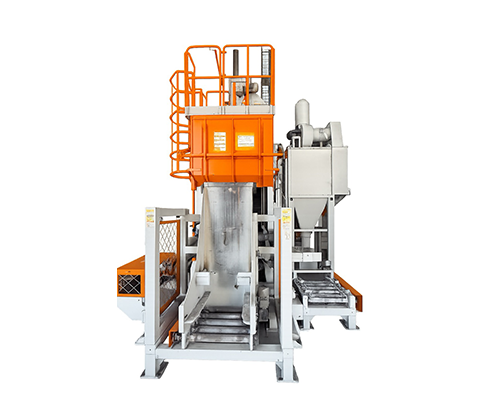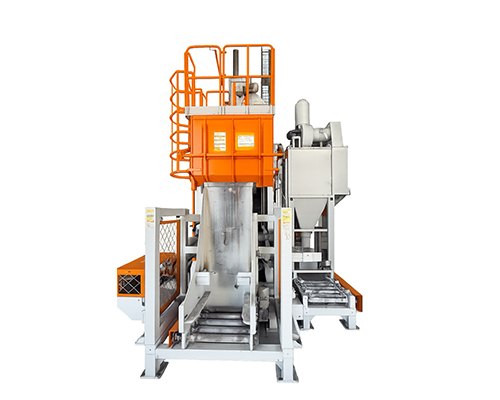
Junhe® B650A crawler shot blasting machine is mainly applied for batch surface cleaning of small and medium-sized metal workpieces. Driven by a rubber crawler, workpieces keep tumbling continuously. Meanwhile, high-speed blast wheels hurl abrasive shots evenly onto workpiece surfaces to remove oxide layers, rust and other attachments, enabling workpieces to meet required surface cleanliness and roughness for subsequent processing.
Integrated with automatic feeding, shot blasting cleaning, abrasive recycling, vibratory discharging, dust removal and electric control, the equipment boasts reasonable structure, easy operation, stable running and convenient maintenance.
Workpiece Loading → Hydraulic Feeding → Workpieces Enter Blast Cabinet → Workpiece Tumbling Driven by Crawler → High-speed Shot Blasting Cleaning → Automatic Abrasive Recycling & Circulation → Crawler Reversal for Discharging → Vibrating Screen Conveying → Workpiece Collection
In operation, material baskets loaded with workpieces are placed on the feeding mechanism, and the hydraulic system tips workpieces into the shot blasting cabinet. The rubber crawler keeps rotating to tumble workpieces fully, ensuring uniform shot bombardment across all workpiece surfaces.
After blasting, the crawler runs in reverse direction to send workpieces onto the vibrating screen, which conveys finished parts to collecting bins via vibration. Used abrasive shots are recollected, lifted, screened and separated before being fed back into the blasting system for cyclic reuse.
Continuous tumbling driven by the rubber crawler allows full shot impact on all sides of workpieces, guaranteeing consistent cleaning quality for bulk batches.
Equipped with LS-360B direct-coupled blast wheel rated at 7.5 kW. Key wearable components are made of high-chromium alloy with outstanding abrasion resistance.
Fitted with hydraulic feeding unit and vibrating discharge screen to realize automatic workpiece feeding, discharging and transportation, greatly cutting manual workload.
The abrasive circulation system consists of screw conveyor, bucket elevator, air separator and shot control valve, completing automatic collection, separation and cyclic reuse of blasting shots.
Configured with pulse back-blow cartridge dust collector with an air volume of approximately 4,000 m³/h. Its dust collection efficiency reaches over 98.98% for 0.5 μm particulate matter.
Adopts PLC + touchscreen control. Operators can set process parameters including blasting duration, blasting current and shot frequency. Real-time equipment status display and fault alarm functions are available.
The inner wall of the blast cabinet is lined with high-manganese steel wear-resistant liners, and replaceable wear-resistant alloy plates are added in high-impact zones. The machine is equipped with emergency stop buttons, safety guards, maintenance platforms and safety railings.
| Item | Technical Parameter |
|---|---|
| Equipment Model | Junhe® B650A |
| Equipment Type | Crawler Shot Blasting Machine |
| Applicable Workpieces | Rollable small and medium-sized metal workpieces |
| Workpiece Size | Diameter over 6 mm |
| Maximum Loading Capacity | Less than 260 kg per batch |
| Recommended Loading Volume | 0.07~0.1 m³ |
| Shot Blasting Coverage Rate | 95% |
| Blast Wheel Power | 7.5 kW |
| Abrasive Recycling Mode | Automatic recycling via bucket elevator |
| Abrasive Recovery Efficiency | 135 kg/min |
| Dust Removal Type | Pulse back-blow cartridge dust removal |
| Dust Removal Air Volume | 4000 m³/h |
| Dust Collection Efficiency | Higher than 98.98% |
| Dust Emission Concentration | Less than 10 mg/m³ |
| Compressed Air Pressure | 0.6~0.8 MPa |
| Power Supply Requirement | AC 380V, 50Hz |
| Inner Blast Chamber Overall Dimension | 1800*1300*2210 mm |
| Overall Machine Dimension | Approx. 6350*2200*4800 mm |
All parameters shall be subject to the technical proposal and final confirmed drawings.
B650A crawler shot blasting machine consists mainly of the following assemblies:
Suitable for small and medium-sized workpieces that can tumble freely and resist damage from mutual collision. It is applied for the following surface treatments of workpieces: